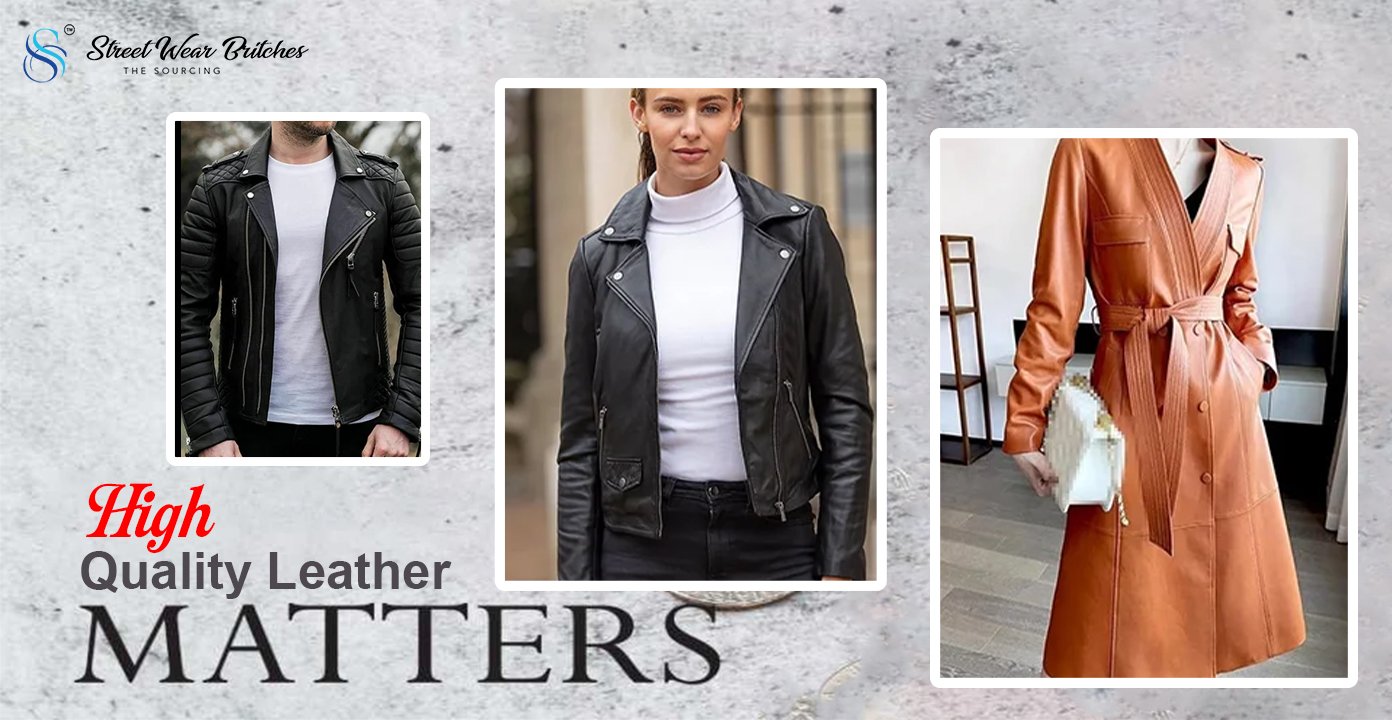
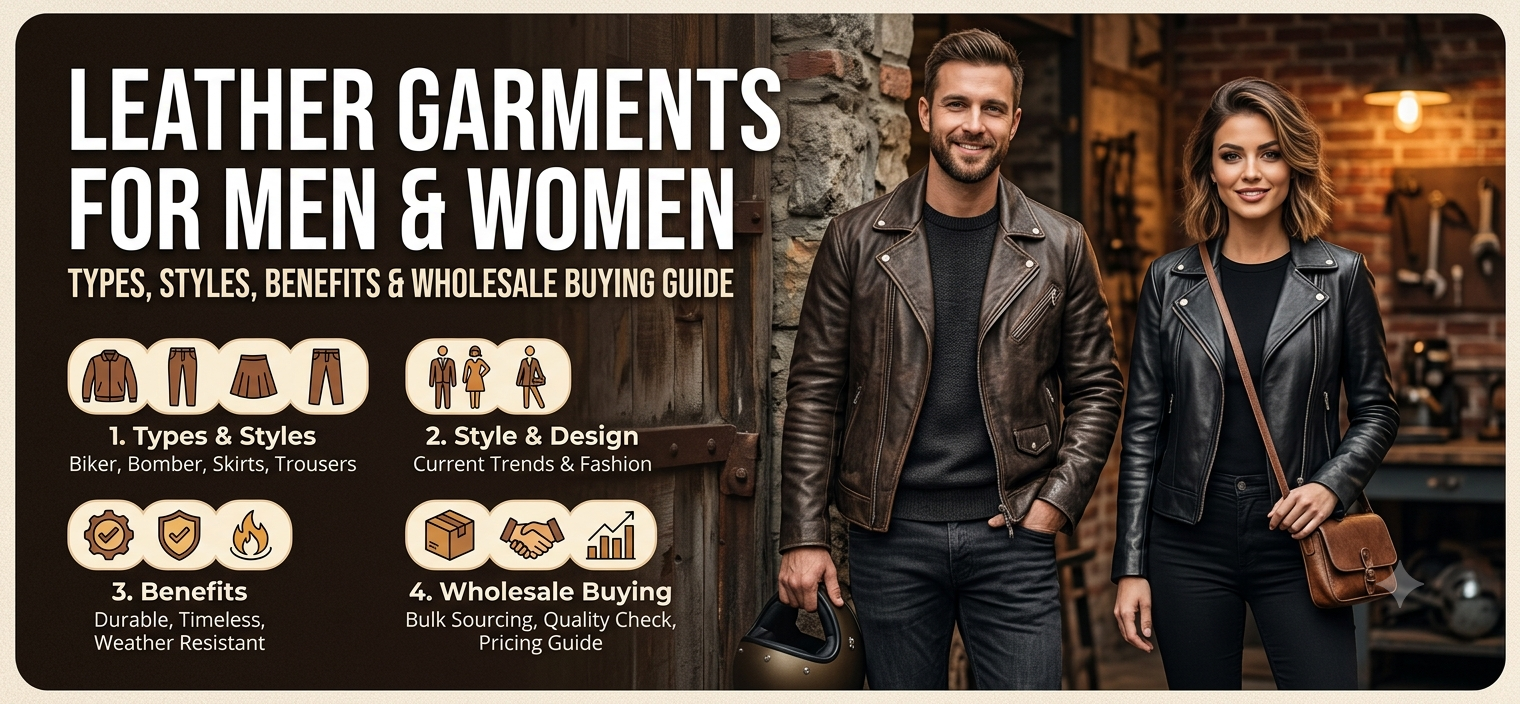
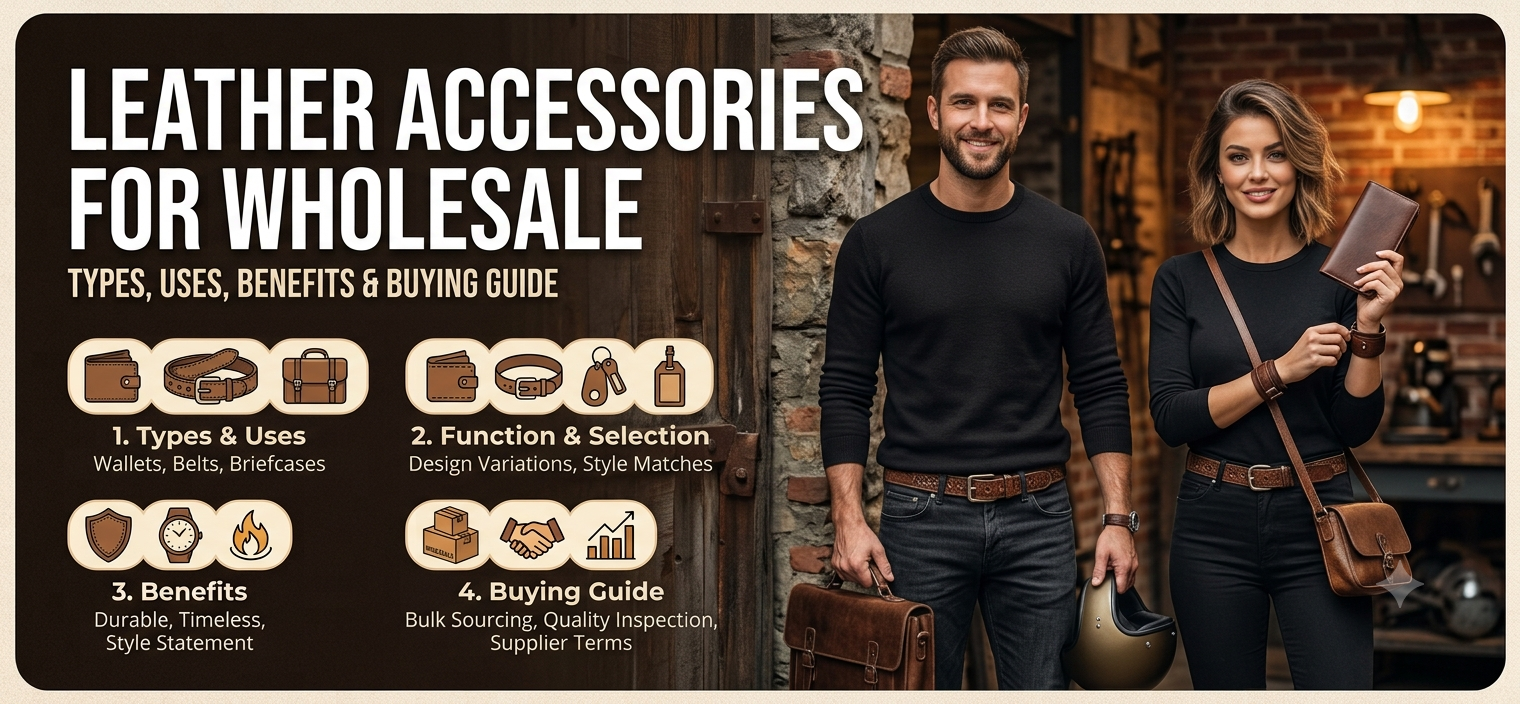
Leather has always been synonymous with style, durability, and timeless elegance. From rugged biker jackets to sleek blazers, leather garments hold a unique place in the world of fashion. But not all leather is created equal — the quality of leather you choose determines how your garment will look, feel, and last over time. Understanding what makes leather “quality” is essential for anyone looking to invest in a premium, long-lasting piece.
What Makes Leather “Quality”?
The term “quality leather” refers to how well the hide has been processed, finished, and crafted. True quality is determined by several key factors:
High-quality leather feels supple, has a natural aroma, and ages beautifully — developing character with every wear.
Types of Leather Used in Garments
Different leather types serve different purposes. Here’s a breakdown:
| Type |
Texture & Look |
Durability |
Common Uses |
Approx. Price Range (?) |
| Full-Grain Leather |
Natural grain with imperfections |
Excellent |
Jackets, bags, shoes |
?12,000 – ?25,000 |
| Top-Grain Leather |
Smooth and refined |
Very good |
Jackets, belts |
?8,000 – ?18,000 |
| Genuine Leather |
Processed and layered |
Moderate |
Affordable fashion |
?4,000 – ?8,000 |
| Suede / Nubuck |
Velvety soft texture |
Moderate (needs care) |
Boots, jackets |
?5,000 – ?10,000 |
| Patent Leather |
Glossy, polished |
Moderate |
Fashion wear |
?3,500 – ?7,000 |
Full-grain leather is the most premium type — it retains the natural markings of the hide and is incredibly durable. Top-grain leather offers a balance of quality and smoothness, while genuine leather is often made from leftover hide layers and is more affordable.
Why Quality Leather Matters
Choosing quality leather is about more than appearance — it’s about longevity, comfort, and value.
- Durability and Longevity: Premium leather can last decades when maintained properly. It resists cracking and tearing, unlike synthetic versions.
- Comfort and Fit: Real leather adapts to your body’s shape, becoming more comfortable over time.
- Appearance and Patina: Quality leather develops a rich patina — a sheen that adds depth and personality as it ages.
- Breathability and Warmth: Natural fibers allow airflow while keeping you warm in cold conditions.
- Sustainability Aspect: High-grade leather, when sourced ethically, is biodegradable and more sustainable than plastic-based synthetic leather.
A quality leather jacket, for instance, is an investment — it not only enhances your style but becomes better with age.
How to Identify Good Leather Garments
Before purchasing, inspect these essential details:
- Touch & Smell: Real leather feels supple and has a distinct earthy smell. Fake leather feels plastic-like and odorless.
- Grain Inspection: Natural grain patterns and small imperfections are signs of authenticity.
- Stitching Quality: Even, strong stitching and neat finishing reflect superior craftsmanship.
- Hardware & Lining: Premium zippers, buttons, and inner lining indicate overall garment quality.
- Brand & Certification: Look for trusted brands and certifications like Leather Working Group (LWG) that guarantee responsible sourcing.
- Price Factor: Genuine high-quality leather comes at a cost — if it’s too cheap, it’s likely not authentic.
Choosing the Perfect Leather Garment
Selecting the right leather piece depends on your purpose, style, and comfort.
- Purpose-Based Selection:
- For Daily Wear: Lightweight top-grain or lambskin jackets offer flexibility.
- For Riding or Heavy Use: Cowhide or buffalo leather provides superior protection.
- Fit and Cut:
- Choose a snug but comfortable fit — leather stretches slightly over time.
- Classic cuts like biker, bomber, or blazer styles never go out of fashion.
- Color & Finish:
- Black and brown are timeless; tan, maroon, or navy add personality.
- Matte finishes are subtle, while polished leather gives a bold look.
- Seasonal Choice:
- Opt for thinner leathers in summer; thicker hides for winter warmth.
Tip: Always try the garment in person if possible — leather fit differs from fabric clothing.
Caring for Quality Leather
Even the best leather needs proper care to maintain its charm:
- Cleaning: Wipe gently with a damp cloth. Avoid using harsh soaps or detergents.
- Conditioning: Use a leather conditioner every few months to keep it soft and prevent cracks.
- Storage: Keep garments in a cool, dry place. Use padded hangers and cover with breathable fabric, not plastic.
- Avoid Moisture: If wet, dry naturally at room temperature — never use direct heat.
- Polishing: Occasional polishing helps maintain shine and prevents dullness.
Proper maintenance ensures your leather stays timeless for decades.
Common Mistakes to Avoid When Buying Leather
Many buyers get deceived due to lack of awareness. Avoid these mistakes:
- Buying “PU” or “faux” leather thinking it’s genuine.
- Ignoring the type of tanning process used.
- Choosing style over comfort and fit.
- Overlooking details like lining, seams, and zippers.
- Falling for heavily coated leather that hides imperfections but reduces breathability.
Being informed helps you make a smart and lasting investment.
Quality Leather vs. Synthetic Leather: Quick Comparison
| Feature |
Quality Leather |
Synthetic Leather (PU/Faux) |
| Texture |
Natural, soft, breathable |
Smooth, plastic-like |
| Durability |
Lasts decades |
Cracks and peels over time |
| Aging |
Develops rich patina |
Looks worn and faded |
| Comfort |
Adapts to body, breathable |
Non-breathable, sticky in heat |
| Eco-Impact |
Biodegradable if vegetable-tanned |
Made from plastic, non-biodegradable |
| Approx. Price Range (?) |
Rs 8,000 – ?25,000 |
Rs 1,000 – ?5,000 |
Quality leather offers long-term satisfaction, while synthetic leather may only provide a temporary fashion fix.
A leather garment is more than just a piece of clothing — it’s a statement of craftsmanship, comfort, and confidence. When you choose quality leather, you invest in something that grows more beautiful with age, reflecting your personality and taste.
So, the next time you shop for a leather jacket or skirt, look beyond just the brand name or price tag — feel the texture, check the grain, and trust your senses.
Because real quality never goes out of style.
FAQs
1. How can you tell real leather from fake?
Real leather has a natural smell, uneven texture, and slight imperfections, while fake leather looks too smooth and feels synthetic.
2. Is genuine leather better than full-grain leather?
No. “Genuine leather” is a lower grade made from processed hide layers, whereas “full-grain” is the topmost, most durable, and natural layer.
3. What’s the best leather for jackets?
Cowhide and lambskin are the best choices — cowhide for durability and lambskin for softness and luxury.
4. How often should you condition leather garments?
About every 3–6 months, depending on use and climate conditions.
5. Can leather be eco-friendly?
Yes, vegetable-tanned and ethically sourced leathers are far more sustainable than synthetic alternatives made from plastic.